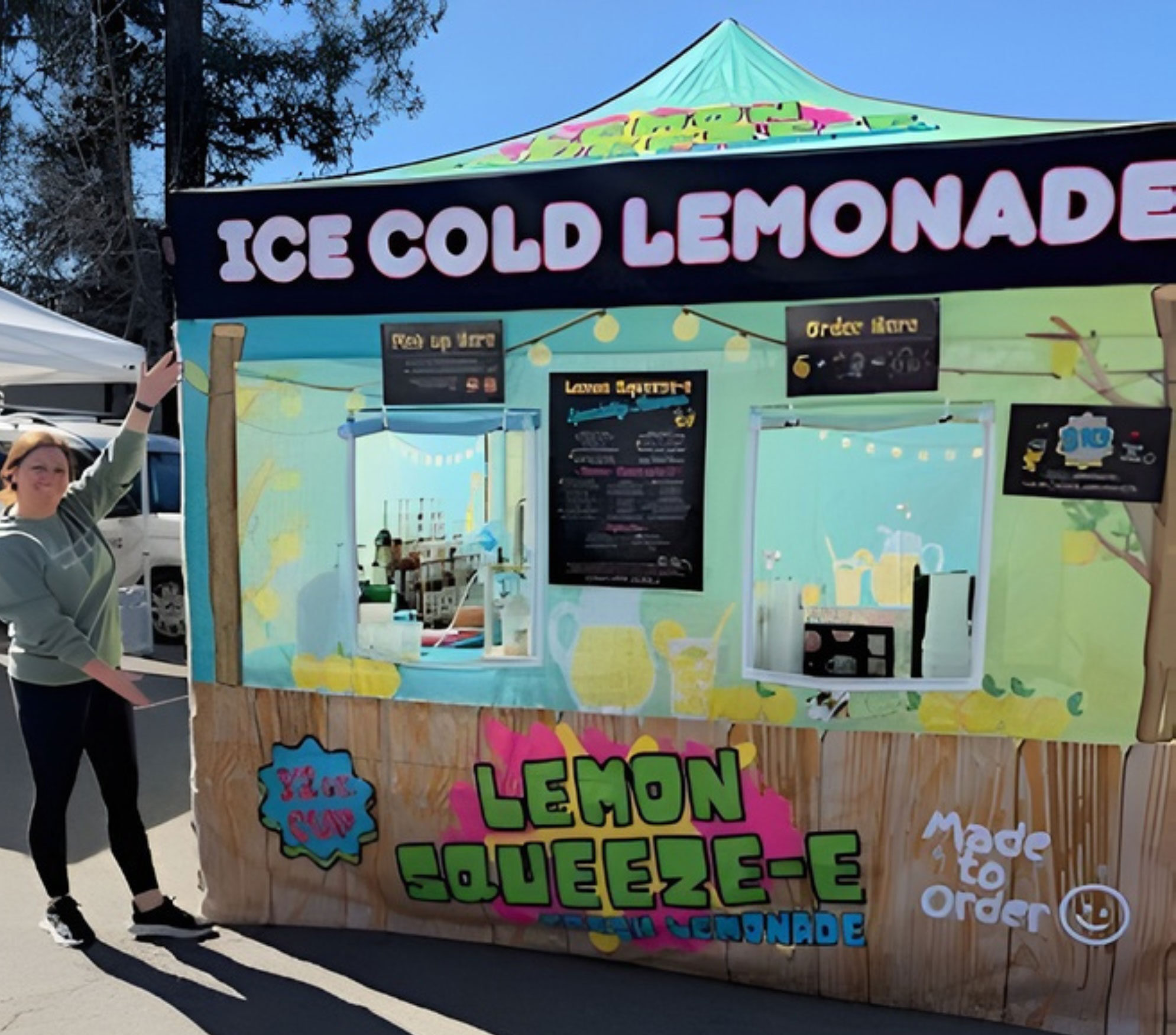
On our journey to understand more about the cottage food operator’s journey and what it can be like to start a home-food business, we attended many local East Bay fairs and farmer’s markets. On a visit to the Dublin St. Patrick’s Day Fair, we met Jen at her lemonade and mini donut stand. After a warm welcome to her booth, we got to chatting and her story had us charmed and inspired. We knew we had to capture her grit and determination for our home-chef and cottage food community, as it has the power to inspire countless others. This is the journey of Jennifer Squier, the founder of Lemon Squeeze-e and Disco Donut.
The Journey of Jen’s Business
Starting a home business is less about a “perfect plan” and more about the courage to say “yes” to a simple idea. For Jen that journey began four years ago, sparked by a desire to help her sister supplement her income while caring for her daughter (Jen’s niece) in need of extra care.
Jen was busy working full-time at Starbucks when her sister approached her with the idea to sell baked goods through social media. They dove into the project, transforming Jen’s home kitchen into a certified Cottage Food Operation (CFO). Jen was putting in hours of research and labor to get through the process, navigating city bureaucracy, passing home inspections, and investing in new equipment such as a dedicated fridge. This was not easy at the time as government web presence has improved vastly in the last 5 years and resources felt hidden.
Finally, the duo was ready to start producing their sweet treats. Their first idea? Gourmet caramel apples! The caramel was relatively easy to make and cost-effective, but they quickly realized that the process of making the caramel apples and decorating them intricately was long and labor-intensive. After about 6 months of hard work and even increasing the price of their apples, Jen realized the profit wasn’t matching the hours spent in the kitchen. It was time for a change: lemonade.
Finding Her Footing in the Farmers Market
Jen decided to expand the business into the community. Investing roughly $2,500 in a tent, supplies, and permits, she set her sights on local farmers markets. The transition wasn’t easy, at their first popup, a free church event, they received only $200 in lemonade sales and zero apples sold.
Disappointed but not defeated, Jen began cold-calling farmer’s market managers. A lucky break came when she reached Cheyenne Erickson, then the then regional manager for the Dublin market.
“Cheyenne was pivotal to getting me into the farmer’s market,” Jen recalls.
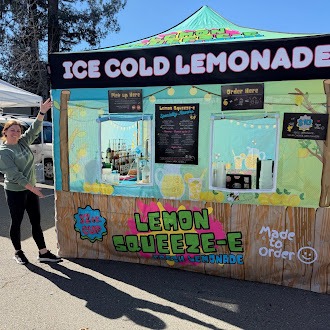
Once in the Dublin Farmer’s Market, Jen began to find her rhythm and the business attracted more customers. They phased out the labor-heavy apples to focus on expanding their lemonade offerings. The success was encouraging.
Once in the Dublin Farmer’s Market, Jen began to find her rhythm and the business attracted more customers. They phased out the labor-heavy apples to focus on expanding their lemonade offerings. The success was encouraging.
After a first event going less than perfect, it could be easy for any entrepreneur to feel discouraged. It takes a determined person to make the pivots Jen made, and it was awe-inspiring to hear how she made her lemons into lemonade and persevered through her obstacles (that pun was intended!).
Growth and the “Big Crossover”
As the business grew, so did the challenges of scaling. By her second year, Jen expanded to the Danville Farmer’s Market, and hit a learning curve: understanding the preferences of her new customer base. While Dublin customers had their favorites, the Danville regulars enjoyed different customizations. Jen enjoyed the process of getting to know her customers and developing her business acumen.
Jen soon realized her weekly cottage food operation earnings had well surpassed her earnings at Starbucks. This eye-opening revelation eventually led to a major life change right before her third farmer’s market season. When she voiced wanting to dedicate more time to the next market season, her manager raised concerns about time and a conflict of interest. Jen decided to pursue her own vision, she bought out her sister’s share of the business (who stayed on as a valued employee) and took full control of the operation’s direction, feeling unencumbered and extremely motivated.
Jen’s drive pushed her toward a new chapter. Her first move was reaching out to Cheyenne, who directed her toward the Martinez Farmer’s Market, which quickly became her standout market. Jen fell in love with the atmosphere there, describing the Martinez market attendees as a community that “really shows up for their city and small businesses”.
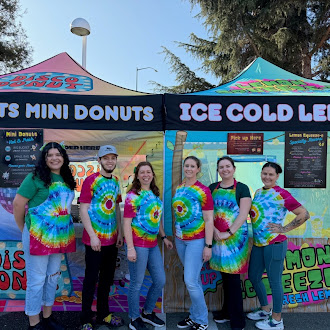
To stay competitive in an oversaturated lemonade market, she made the bold choice to invest in mini donuts. Though it was a significant financial risk to buy the machine and accompanying equipment, the investment paid for itself as she expanded Lemon Squeeze-e and Disco Donut to numerous pop-ups. When Jen mentioned she was starting to be more selective with her markets, I was curious to understand what that meant to her. She described it as reaching what she calls the “Huge Crossover” in her career: the empowering shift from simply “doing what you can do” to finally “doing what you want to do”.
The Next Era: Brick and Mortar
Today, Jen’s journey has come full circle. In October, 2025, she transitioned from a CFO to a commercial kitchen license and opened a brick-and-mortar cafe, The Lemon Tree SF, on Market Street and 10th in San Francisco. Located near City Hall, the shop specializes in açaí bowls, fresh salads, and produce-based foods that she can source from her local farmer’s markets. She is even eyeing a return to her roots, considering an espresso machine to add a coffee component to the business.
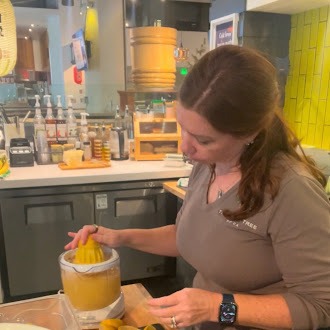
From a home kitchen to the bustling streets of SF, Jen’s story is a testament to the power of courage, risk-taking, and belief in one’s self. We are so lucky to be able to share her story and bring her advice to current and future chefs and food entrepreneurs.
For other Cottage Food Operators looking to make the leap, Jen offers this piece of advice:
“Be somebody who’s willing to take risks. Be that person to say ‘I’m going to try it whether it works or not.’ You’re going to be successful either way because if it doesn’t work, you can find success in knowing you tried.”
Home Food Central
At Home Food Central, we are eager to support home chefs with CFO licenses and aspiring to make strides similar to Jen. Not everyone is meant to or able to transition and re-transition as Jen did. But at HFC, we believe, everyone is meant to explore their utmost potential and grow to the farthest extent possible.
Written By: Aanya Shah